
Concrete Coating Types Explained: Why Material Choice Matters
Choosing the right floor coating isn’t just about appearance – it’s about long-term performance, durability, and safety. That’s why material selection matters more than most people realize.
At Big Paw Concrete Coatings, we only use premium products backed by consistent real-world results. The concrete coating industry is full of big promises, imported materials, and companies that prioritize a fast install over a lasting result – and we built Big Paw as the alternative. We exclusively install Resinwerks systems for interior floors and StreetBond systems for outdoor pavement: Both are 100% American-made coatings with consistent formulas and proven track records across residential, commercial, industrial, and municipal applications. We don’t use box-store kits, imported materials, or systems we can’t stand behind.
This page breaks down every coating type we work with, the ones we avoid, and the exact reasons why. Whether you’re a homeowner upgrading a garage, a business owner sourcing a commercial kitchen system, or a municipality maintaining public infrastructure – understanding the material is the first step toward making the right decision for your surface.
Epoxy Floor Coatings
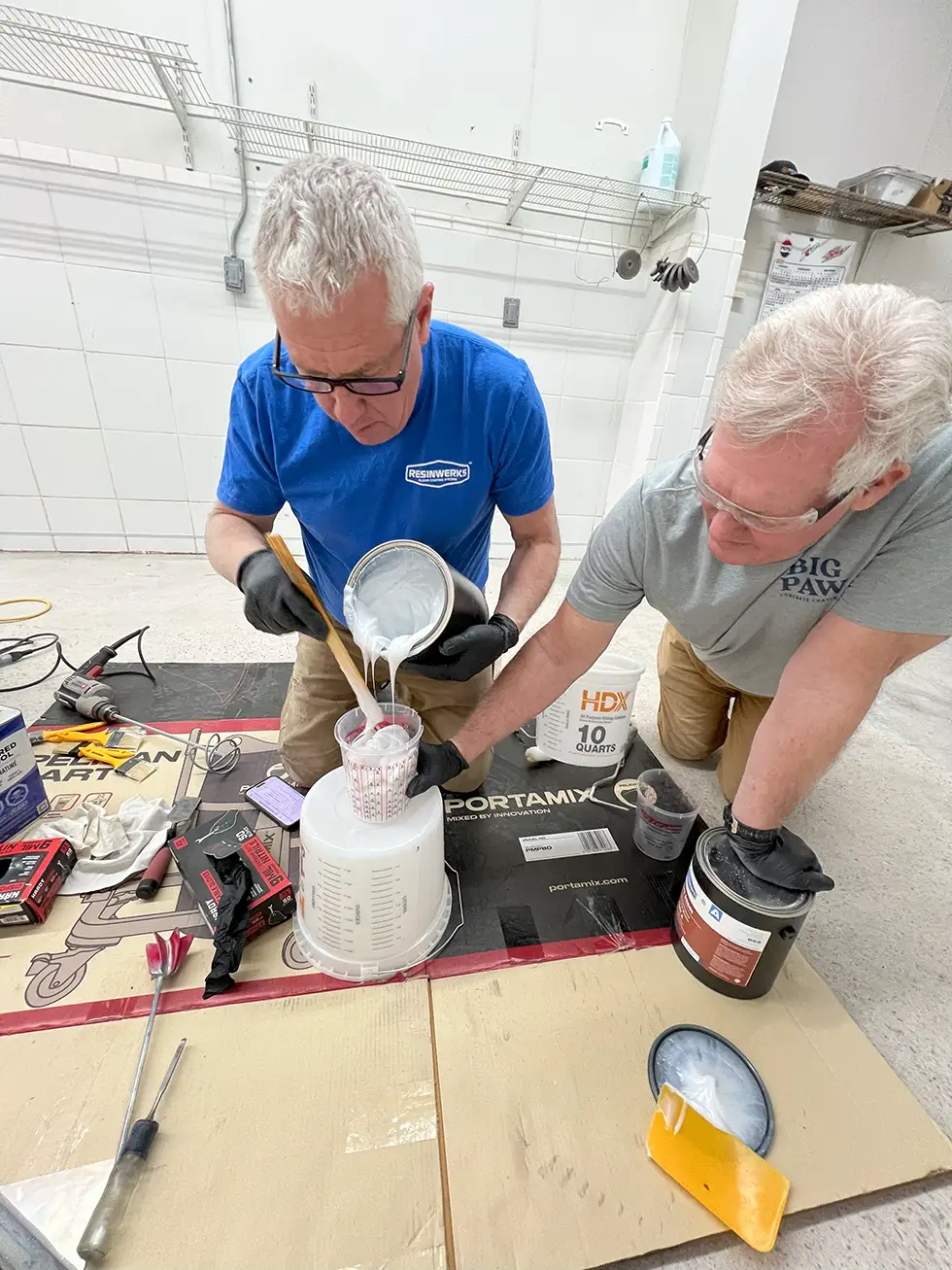
Epoxy is one of the most trusted and widely used concrete coating solutions. As a base coat, moisture barrier, or resurfacing layer, epoxy provides long-lasting protection and excellent adhesion.
- Superior Bonding: Epoxy penetrates into properly prepped concrete, forming a powerful chemical and mechanical bond.
- High-Build Thickness: Great for leveling rough or damaged slabs, especially with self-leveling epoxy formulations.
- Moisture Mitigation: Vapor barrier epoxies help prevent coating failure on damp or green (new) concrete.
- Durability: When top-coated properly, epoxy systems resist wear and abrasion for years.
- Longer Cure Times: Epoxy systems typically take longer to cure than polyaspartics, which can extend install times on larger jobs or during colder weather.
Note: Epoxy is not UV-stable and will amber over time when exposed to sunlight. It’s also important to note that not all epoxies are created equal – many DIY kits sold at big-box stores contain low-solids formulations that don’t offer the same durability, adhesion, or longevity as professional-grade systems. These kits may look appealing but often fail prematurely, especially without proper surface prep. In coatings, cheaper is often more expensive – cutting corners on materials or prep work leads to costly repairs or full replacement down the road.
Best for:
- Garage floor base coats
- Indoor commercial spaces
- Industrial resurfacing
- Moisture barrier layers
Polyaspartics are a type of aliphatic polyurea engineered for superior workability and floor coating performance. They offer fast cure times, excellent chemical resistance, and UV stability without the extreme speed of traditional polyureas.
At Big Paw, we use polyaspartics as UV-stable topcoats and, when appropriate, as base coats for fast-turnaround installs without compromising quality.
- Rapid Cure: Walkable in hours, drive-ready in 24 hours on most installs.
- UV Stable: Will not yellow or fade in direct sunlight.
- Flexible and Durable: Withstands thermal expansion and high foot or vehicle traffic.
- Clarity and Gloss: Crystal-clear finish ideal for flake or quartz broadcast systems.
- Installer-Sensitive: Shorter working time than epoxy; requires skill and precision to avoid roller marks or bubbles.
Best for:
- Garage and shop floors
- Outdoor or sunlit entryways
- Decorative flake and quartz floors
- Commercial spaces requiring fast return-to-service
(Used indoors or outdoors, polyaspartics offer exceptional durability and aesthetics – when installed by trained professionals.)
Polyaspartic Coatings
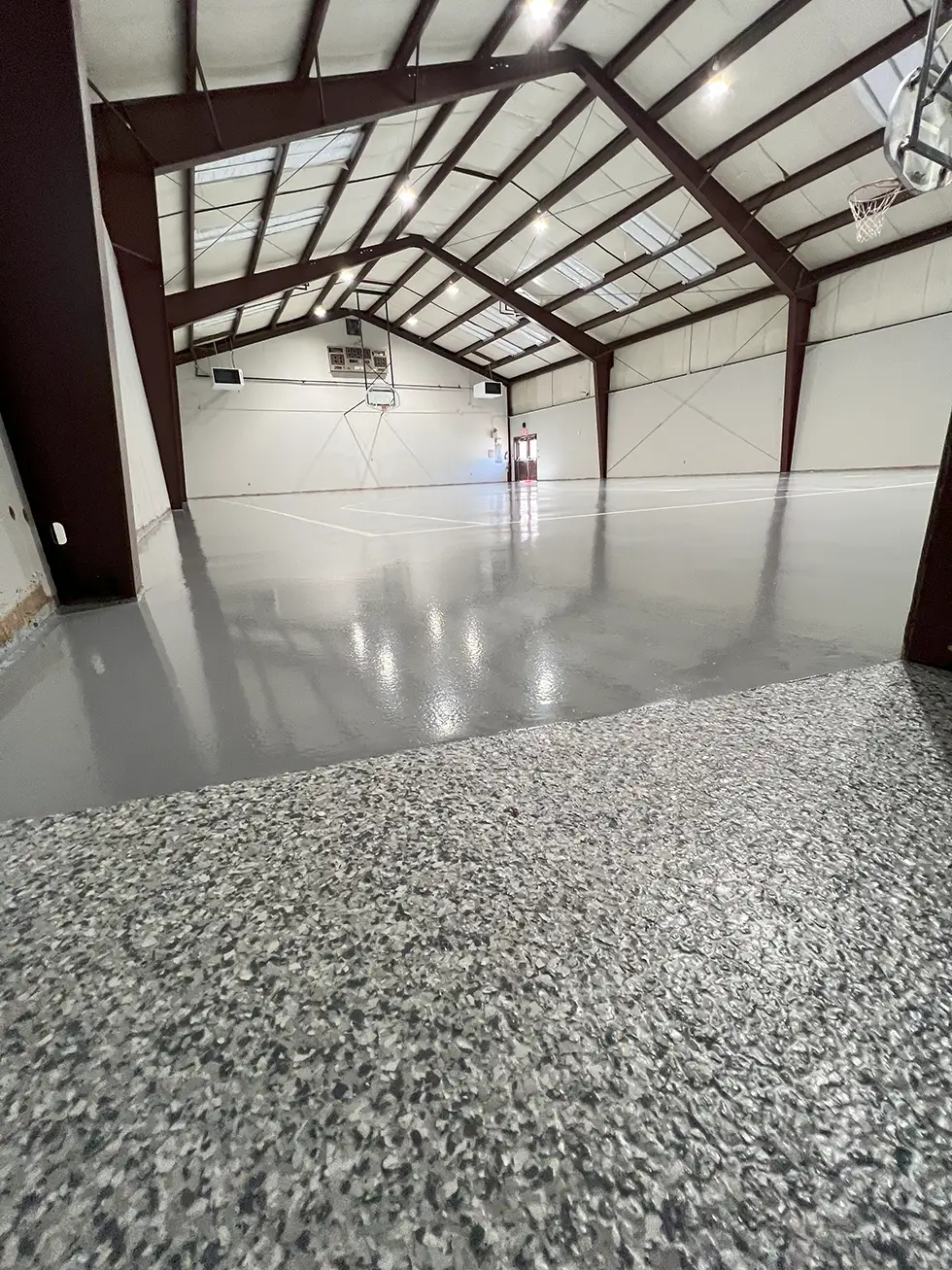
Polyurea Coatings (Why We Don’t Use Them)
Polyurea is a broad class of fast-reacting coatings originally developed for industrial applications like truck bed liners, pipe coatings, and tank linings — not concrete floor coatings. That context matters, because it helps explain why aromatic polyurea is a poor fit when used as a decorative residential or commercial floor system.
There are two types of polyurea: aromatic and aliphatic. Aliphatic polyurea — modified with a polyaspartic ester — is UV stable, has a controlled cure time, and is engineered for floor coating performance. That’s what we use in our polyaspartic systems. Aromatic polyurea is a different chemistry entirely, and it’s the version most commonly found in budget floor coating systems.
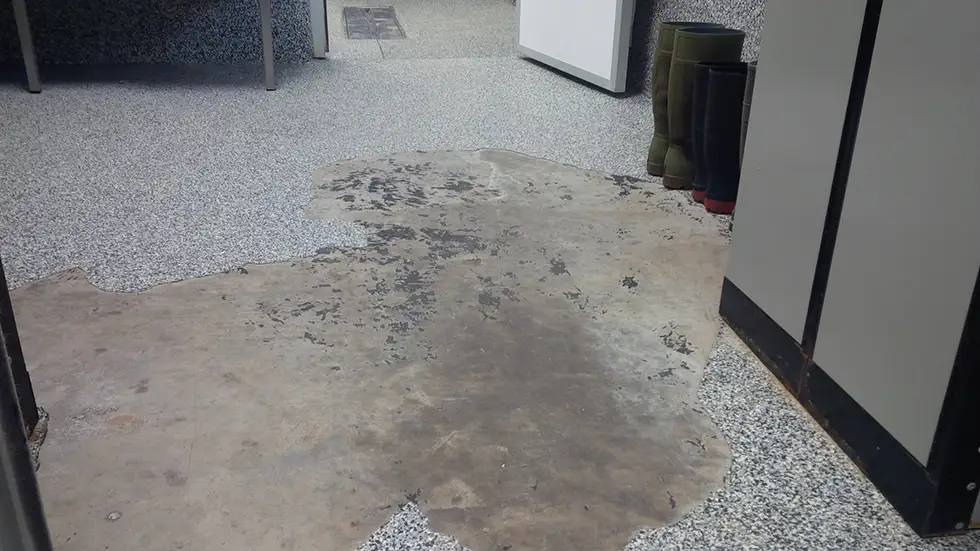
Aromatic polyurea cures fast — pure spray formulations can set in as little as 15 seconds, and even hybrid roll-applied systems have working times of only a few minutes to an hour depending on formulation and conditions. Regardless of where on that spectrum a product falls, the core problem is the same: the aggressive cure chemistry prioritizes speed over the surface penetration and bond development that a durable floor system requires. It’s the backbone of the 1-day floor coating model — and the reason those floors peel.
- Not Designed for Floors: Engineered for industrial membranes and containment — not decorative concrete. Adapting it for residential and commercial floors requires precise conditions rarely guaranteed in the field.
- Compromised Bond Strength: The rapid cure limits proper concrete wetting and penetration, increasing the risk of delamination over time.
- Thin Film Build: Many systems wear faster due to low film thickness, offering less long-term protection than high-build epoxy or polyaspartic systems.
- UV Yellowing: All aromatic-based polyurea systems will fade or change color when exposed to UV light — a serious problem for any floor with natural light.
For residential and commercial floors that need to last, polyaspartic delivers everything aromatic polyurea promises — without the compromises.
Best for:
- Spray-applied industrial membranes
- Specialized waterproofing applications
(Not recommended for decorative or long-term residential and commercial floors)
Urethane coatings offer excellent protection as the final layer in many of our multi-part systems. They are highly resistant to UV rays, abrasions, and chemicals, making them ideal for commercial and industrial environments.
- UV Stable: Holds color and clarity in bright environments.
- Chemical Resistant: Ideal for auto shops, manufacturing, or labs.
- Traffic-Tough: Resists scuffing in high-use areas.
- Slip-Resistant: Can be broadcast with aggregate for added traction in wet areas.
- Satin to Gloss Finishes: Customizable aesthetics.
- Limited Build Thickness: Urethane topcoats are not designed to level or resurface damaged concrete – they work best as a final protective layer over a well-prepped and installed system.
Best for:
- Public-facing commercial floors
- Warehouses and showrooms
- Food service and brewery floors
Urethane Top Coats
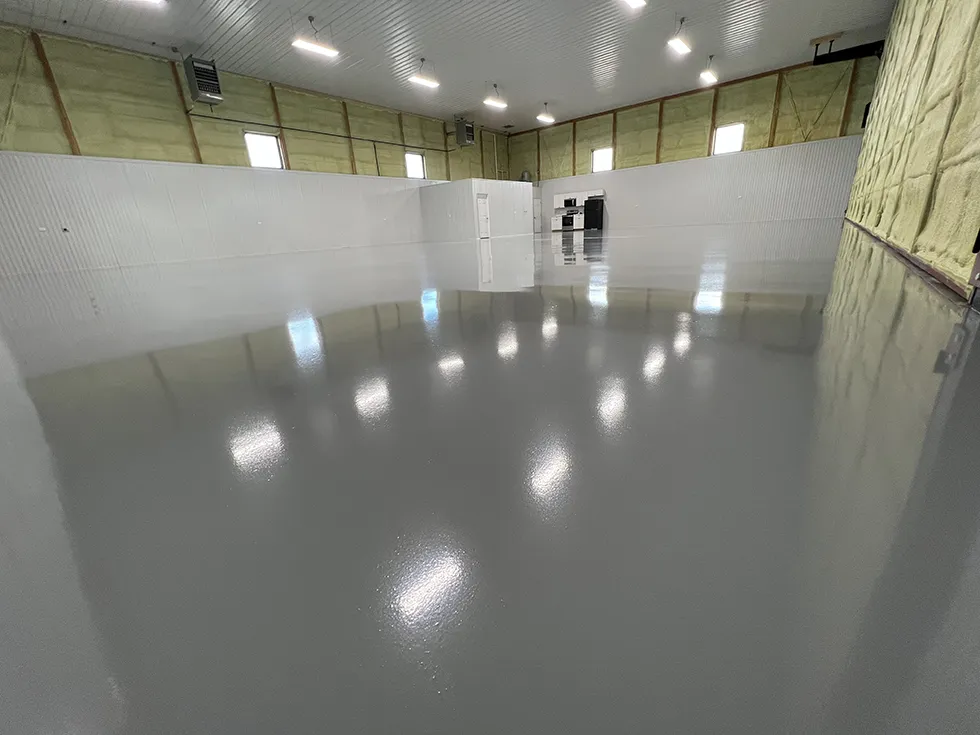
Urethane Cement Flooring Systems
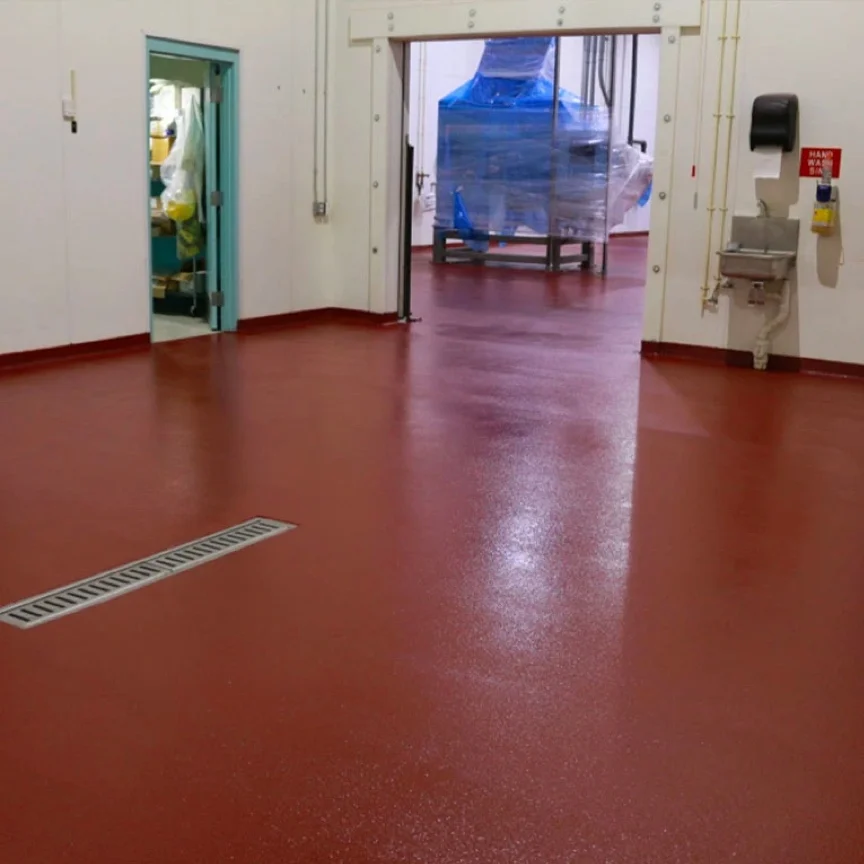
Also called polyurethane concrete, urethane cement is the gold standard for commercial and industrial environments with extreme thermal, chemical, and moisture demands. This is a heavy-duty system engineered for punishment – not a typical residential application, but essential when the environment calls for it.
It’s worth noting that urethane cement is one of the most technically complex systems to install correctly. It requires thorough surface preparation to a minimum CSP-3 profile, precise mixing ratios, and a skilled installation crew. When installed properly it’s virtually unmatched in performance. When it’s not, the results are costly. This is not a system that should be entrusted to a generalist contractor.
- Thermal Shock Tolerance: Won’t crack or peel from hot or cold washdowns, steam cleaning, or rapid temperature swings.
- Bacteria-Resistant: Seamless and sanitary, ideal for hygiene-sensitive settings where cracks and pores can harbor contaminants.
- Moisture Compatible: Can be applied to damp or green concrete, making it ideal for facilities that can’t wait for a full cure cycle.
- Impact and Abrasion Resistant: Handles heavy equipment, constant foot traffic, and industrial cleaning protocols without breaking down.
Best for:
- Commercial kitchens and food processing facilities
- Breweries, distilleries, and beverage production
- Cold storage and wash-down zones
- Industrial manufacturing and processing environments
- Commercial Mechanical Base Coats
MMA is a fast-curing, 100% reactive resin-based coating system used across a wide range of applications — from high-traffic outdoor pavement to demanding interior commercial and industrial floors. It is one of the most durable coating chemistries available, commonly specified by municipalities, engineers, and facility managers for surfaces where rapid return-to-service and long-term performance are non-negotiable. For outdoor pavement specifically, MMA is the gold standard — delivering friction, durability, and cold-weather performance that no other pavement coating chemistry can match.
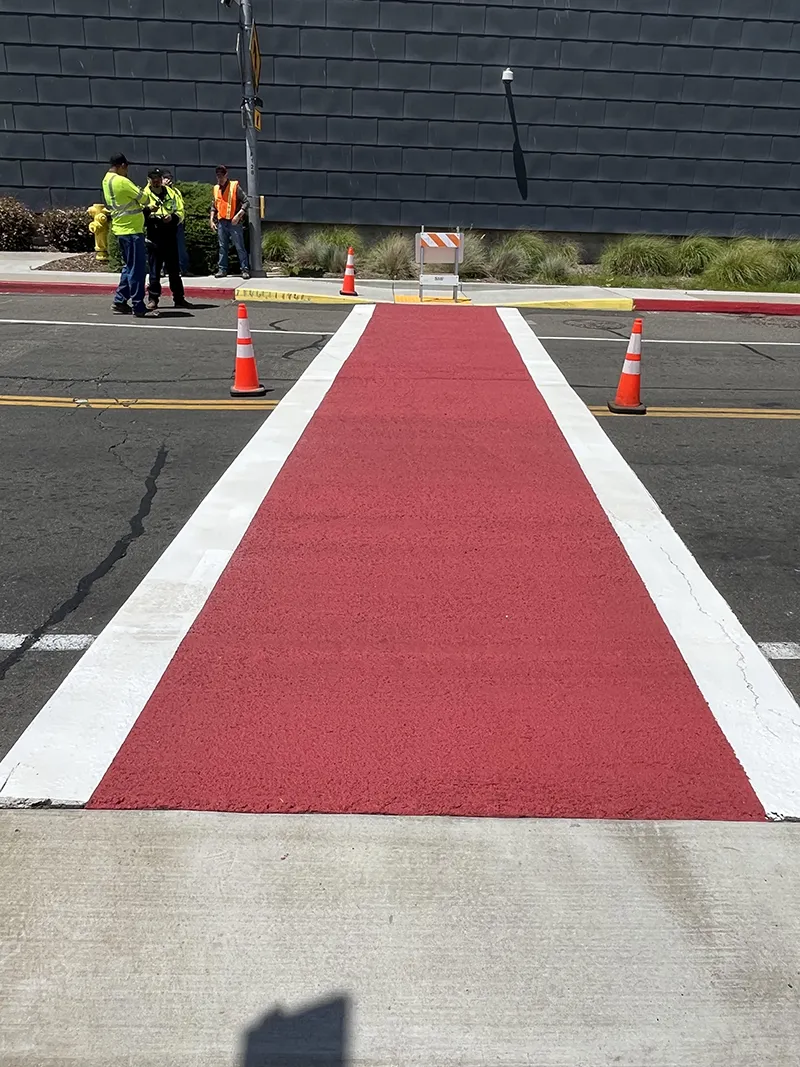
At Big Paw, we use MMA-based StreetBond systems for outdoor pavement applications including crosswalks, bike lanes, traffic lanes, and parking structures where cure time, durability, and friction performance are critical.
- Extremely Fast Cure: Pavement-grade MMA systems cure in as little as 15 to 30 minutes, getting surfaces back in service fast and minimizing disruption to traffic and operations.
- Cold-Temperature Application: StreetBond Pro 250 can be applied in temperatures as low as 32°F, extending the usable install window through Montana’s shoulder seasons when other systems can’t be installed.
- Excellent Adhesion: Bonds aggressively to both asphalt and concrete with proper surface preparation.
- High Friction: UV-stable corundum aggregate provides a durable, high-friction surface that meets ASTM E-303 slip resistance standards.
- Flexible: Works with the natural expansion and contraction of asphalt without peeling or delaminating.
Best for:
- Crosswalks and traffic lanes
- Bike lanes and pedestrian pathways
- Parking lots and parking structures
- Municipal and commercial pavement applications
MMA (Methyl Methacrylate) Coatings
Pavement Coatings (Epoxy-Modified Acrylic)
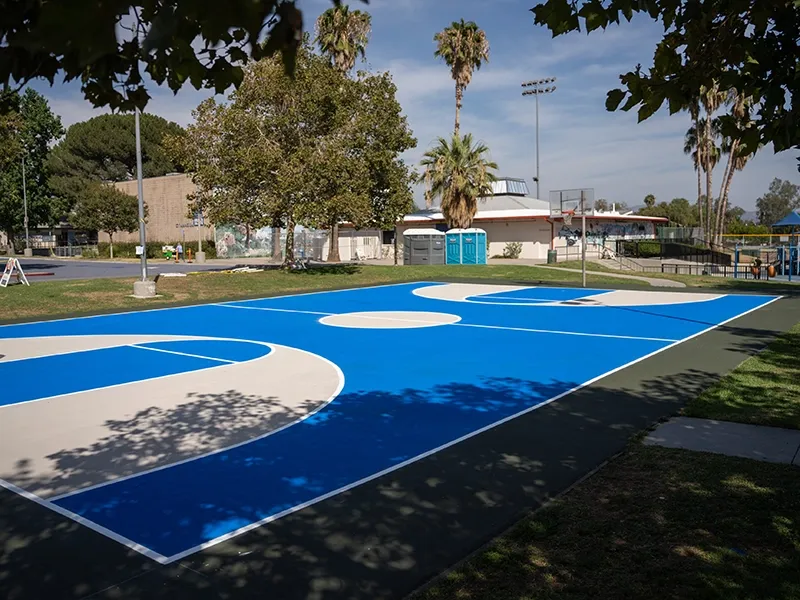
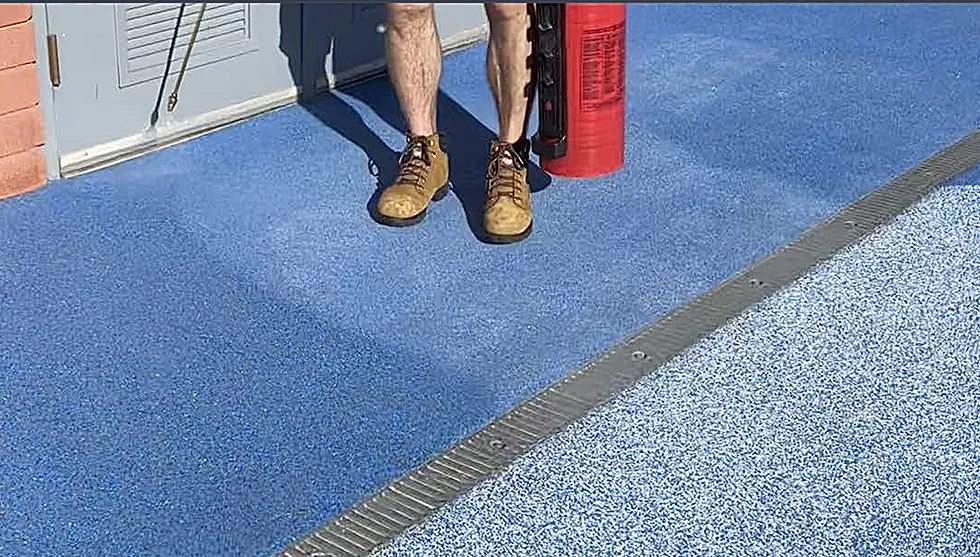
Not all acrylic coatings are the same. The acrylic systems we avoid for interior floors are low-solids, low-durability products that were never engineered for real-world wear. Pavement-grade epoxy-modified acrylic systems are a fundamentally different product designed specifically for outdoor concrete and asphalt surfaces exposed to UV, moisture, freeze-thaw cycling, and traffic.
At Big Paw, we install StreetBond pavement coatings, which use advanced waterborne, epoxy-modified acrylic formulations with factory-blended UV-stable pigments. These are purpose-built pavement systems that meet ASTM E-303 slip resistance standards and are engineered to flex with asphalt without peeling or delaminating – something a standard interior acrylic could never do.
- UV-Stable Color: Factory-blended pigments resist fading and degradation from sun exposure.
- Flexible: Moves with the natural expansion and contraction of asphalt surfaces.
- Waterborne and Low-VOC: Safe for outdoor environments and meets applicable air quality standards.
- Slip Resistant: Meets ASTM E-303 standards for traction on pedestrian and vehicular surfaces.
- Decorative Range: Available in an extensive palette of colors for both functional and aesthetic applications.
Best for:
- Residential driveways and walkways
- Commercial sidewalks and entryways
- Crosswalks, plazas, and bike lanes
- Municipal pavement and recreational surfaces
Standard acrylic concrete coatings are inexpensive and easy to apply, but that comes at a cost. Even professional-grade interior acrylics do not perform to the standards we hold at Big Paw for floor applications. The market is full of acrylic-based products many imported or inconsistently formulated that are marketed as concrete coatings but are closer to paint than a true bonded floor system. They look fine on day one and deteriorate fast under real-world conditions.
- Low Durability: Scratches and wears out quickly under foot and vehicle traffic.
- Weak Adhesion: Prone to peeling or bubbling under moisture or wear, especially without thorough surface prep.
- Poor UV Resistance: Yellows and degrades with sun exposure, shortening the life of the finish significantly.
- Inconsistent Quality: Many acrylic products available to contractors and consumers are manufactured with inconsistent quality control, making performance unpredictable from batch to batch.
Note: Pavement-grade epoxy-modified acrylic systems like StreetBond are engineered specifically for outdoor pavement use and are not in the same category as the interior acrylic coatings described above. See the Pavement Coatings section for more information.
Best for:
- Temporary or budget-limited applications
- (Not recommended for long-term interior floor use)
Acrylic Coatings (Why We Avoid Them For Interior Floors)
Ceramic, Nano, and Silicon-Based Coatings (Why We Don’t Use Them)
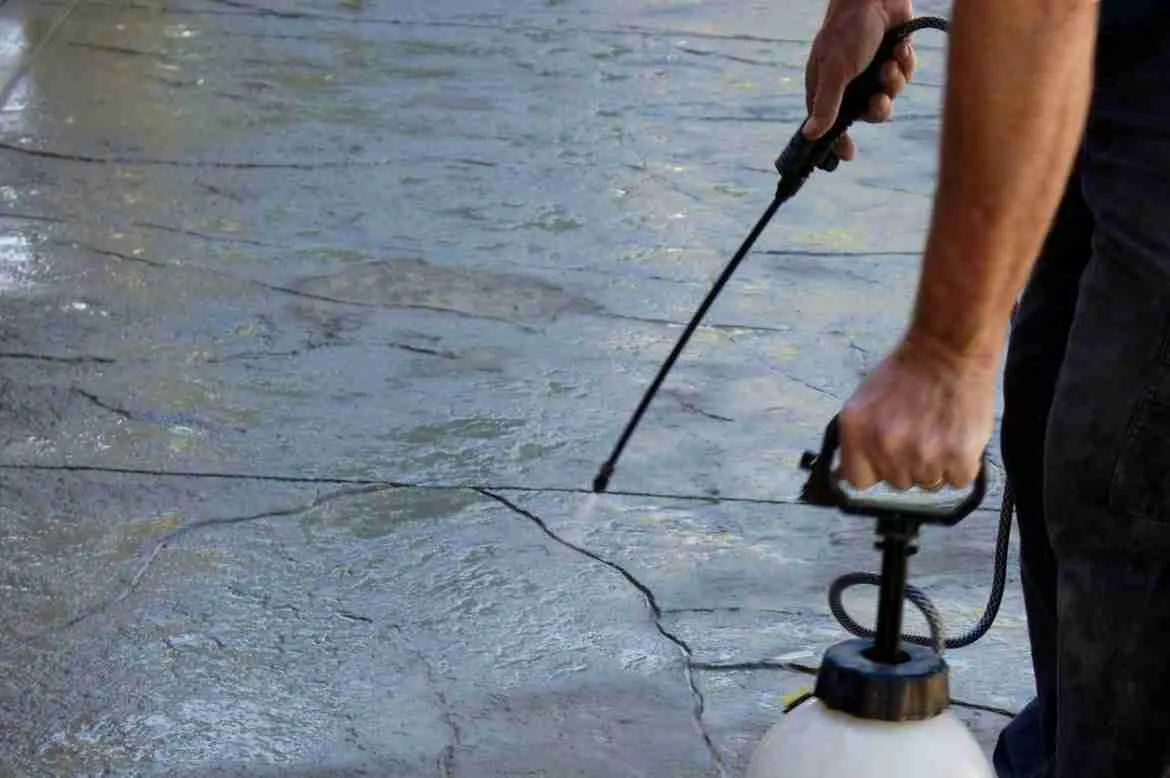
Some coatings marketed as ceramic or silicon-ceramic blends are gaining attention online. These are typically marketed as hybrid surface protectants with water-repellent or chemical-resistant properties – but they are not true traffic-grade concrete coatings.
- Not Designed for Wear: Most are topical finishes meant for vertical surfaces, decorative finishes, or low-traffic areas.
- No Film Build: They don’t offer thickness, impact resistance, or long-term chemical protection like epoxies or polyaspartics.
- Durability Issues: While they may offer short-term hydrophobic properties or shine, they often wear quickly and require frequent reapplication in real-world conditions.
Best for:
- Water repellency on decorative concrete
- Low-traffic vertical or masonry surfaces
At Big Paw, we avoid ceramic and silicon-hybrid systems because they are topical sealers – not true bonded coatings. We focus on floor systems built for real-world use, not short-lived aesthetics.
Why We Only Use Proven Concrete Coating Systems
The concrete coating industry has no shortage of products, manufacturers, and contractors making big promises. Many of the systems flooding the market are imported, inconsistently formulated, or simply not engineered for the demands of real-world floors. It can be genuinely difficult to find straight, unbiased information about what a coating type actually does, how it’s made, and whether it will hold up in your specific environment.
At Big Paw, we cut through that noise. We exclusively install Resinwerks systems for interior floors – 100% American-made coatings with consistent formulas and a proven track record in residential, commercial, and industrial applications. For outdoor pavement, we install StreetBond systems, purpose-built pavement coatings engineered for the specific demands of concrete and asphalt surfaces exposed to the elements. We choose these manufacturers because their products perform, their formulas are consistent, and we can stand behind the results.
Every surface is different. Whether you’re coating a garage, warehouse, commercial kitchen, crosswalk, or bike lane, we build the right system for your surface – one that will last.
Get in Touch
Contact
Hours
Monday – Friday
7:00am-7:00pm
Service Area
Helena, Montana 59601
* Service is available beyond our designated service area upon request